
Table of Contents
- What Actually Makes an Ultrasonic Toothbrush Different
- Ultrasonic vs Sonic Toothbrush: Which One Fits Your Mouth
- What to Check Before You Buy: Features That Decide the Pick
- Ultrasonic Toothbrush for Sensitive Teeth: What to Look For
- How to Use an Ultrasonic Toothbrush Without Damaging Enamel
- Ultrasonic Toothbrush Replacement Heads and Running Costs
- Frequently Asked Questions
Last Updated: October 14, 2026
What Actually Makes an Ultrasonic Toothbrush Different
An ultrasonic toothbrush cleans teeth using vibrations beyond human hearing, typically above 20,000 Hz. Most brushes marketed as "sonic" run 20,000-40,000 vibrations per minute, audible-range motion, not true ultrasound.

At Smile Kit, we build ultrasonic toothbrushes around high-frequency vibration. Instead of bristle force alone, ultrasonic action creates rapid pressure waves in the saliva and toothpaste film around each tooth.
The practical difference is comfort: high-frequency vibration causes less of the tingling numbness associated with ordinary sonic brushes.
Vibration Frequency: Where Sonic Ends and Ultrasonic Begins
Sonic and ultrasonic brushes sit on the same spectrum but behave differently at the gum line. Sonic brushes sweep plaque loose with fast bristle movement; ultrasonic brushes push frequency higher, so cleaning relies more on vibration and fluid movement than on pressure.
That distinction matters because pressure is where most damage happens. The Australian Dental Association's oral health guidance notes that brushing too hard can wear enamel and irritate gums over time.
Ultrasonic vs Sonic Toothbrush: Which One Fits Your Mouth
The right choice depends on your gums, not marketing claims. An ultrasonic toothbrush suits people with sensitivity, receding gums, or a tendency to brush too firmly. A sonic brush suits those who want a familiar feel and don't mind a firmer hand.
Here's how the two compare on the factors that actually affect daily use:
Factor |
Ultrasonic |
Sonic |
|---|---|---|
Frequency |
Above 20,000 Hz |
20,000-40,000 VPM |
Cleaning action |
Vibration and fluid movement |
Bristle sweeping |
Feel |
Gentler, less numbness |
Firmer, more tactile |
Best for |
Sensitive teeth, gum care |
General daily cleaning |
Pressure needed |
Very light |
Light to moderate |
Neither type replaces flossing or professional checks. If your gums bleed consistently, book a dental appointment before changing tools.
What to Check Before You Buy: Features That Decide the Pick
Most roundups list the same four features, modes, timer, pressure feedback, battery, and stop there. That list is necessary but not sufficient, because it treats a true ultrasonic brush and a sonic brush as interchangeable. They are not.
Separate verifiable claims from the rest. A genuine ultrasonic brush should state its frequency in hertz or kilohertz, not just "vibrations per minute".
Frequency, Amplitude and What the Numbers Actually Mean
Frequency is how fast the brush oscillates; amplitude is how far it travels. A brush can run at high frequency with a very small amplitude (the usual ultrasonic design) or at lower frequency with a larger sweep (the usual sonic design).
What you can check: whether the manufacturer publishes a consistent frequency figure, whether the head is designed for that frequency, and whether the handle reduces power when you press harder.
Pressure Sensors, Timers and Brushing Modes
A 2-minute timer with 30-second zone reminders remains the single most useful feature, removing the guesswork from coverage. Pressure feedback is second, and matters more on a high-frequency brush: since you do not need to press, a sensor that warns you when you do keeps technique honest.
Look for at least three modes, gentle for sensitive days, everyday clean, deeper clean, and check whether the brush remembers your last setting. Mode memory decides whether you actually use the gentle mode or default to the strongest one.
Battery Life, Charging and Water Resistance
Battery runtime is usually quoted in days or weeks; read it as a range, not a promise. Runtime falls with heavy use, the strongest mode, and cell age, so a brush rated at 60 days is realistically charged every few weeks, not every few months.
An IPX7 rating means the handle survives accidental submersion, covering tap rinsing and shower use. USB-C charging is worth prioritising because it removes the need for a proprietary dock.
Total Ownership Cost, Not Just the Purchase Price
The purchase price is the least useful number here. What decides real cost is the refill head: its price, how often it needs changing, and whether it will still be stocked in two years.

Work out the two-year cost before committing: handle price plus eight refill heads, plus any replaced early. A cheaper handle with scarce or expensive refills can cost more across two years than a mid-range handle with affordable, consistently stocked heads.
Suitability: Who Each Design Actually Suits
No single brush suits every mouth; suitability depends on your dental situation, not the specification.
- Braces and fixed retainers: cleaning around brackets and wires depends more on head size and access than on frequency. A small round head reaches the bracket margins; a large head often does not.
- Implants and crowns: the priority is cleaning the gum margin without abrading it. Light-contact cleaning and a soft head matter more than a high frequency figure.
- Gum sensitivity and recession: exposed dentine reacts to pressure and to cold. A genuine gentle mode and a soft bristle head are the features that help; a high frequency is not a substitute for them.
- Limited dexterity or grip strength: a larger handle, a non-slip grip and a timer that does the counting for you reduce the effort of brushing properly.
If your gums bleed consistently, or sensitivity persists despite good technique, see a dental professional before changing tools. A toothbrush manages symptoms; it does not diagnose the cause.
Ultrasonic Toothbrush for Sensitive Teeth: What to Look For
Sensitivity is a symptom, not a product category, so the usual advice, buy a soft brush and a gentle mode, only goes so far.
Cloud Sense Ultrasonic Toothbrush K5 - 5 customisable modes →
The most common cause is exposed dentine: when gums recede, the softer layer beneath the enamel is exposed, and fluid movement within the dentinal tubules triggers the sharp response to cold, heat, sweetness or pressure.
That distinction matters for buying. A brush can reduce the mechanical wear that aggravates exposed dentine and make light-contact cleaning easier to sustain, but it cannot treat decay, repair a crack or replace a filling.
What the Evidence Does and Does Not Support
Ultrasonic cleaning is plausible on physical grounds: high-frequency vibration in the fluid film around a tooth can create pressure waves that help disrupt plaque beyond where bristles reach.
What is less settled is how much that mechanism adds in a real mouth over what a powered brush already achieves through bristle motion.
That is not a reason to avoid the category, it is a reason to buy on what you can verify: comfort, pressure feedback, head design, refill cost.
Features That Genuinely Help Sensitive Teeth
- A soft, densely packed bristle head. Softer bristles flex instead of abrading, and a denser pack spreads the same light pressure over more contact points.
- A genuine gentle mode. Check the frequency or speed drop between modes, not just the label. A gentle mode that barely differs from the everyday mode is a label, not a setting.
- Working pressure feedback. On a high-frequency brush the premise is that you do not need to press, so a sensor that flags excess pressure is the feature that protects receding gums.
- A non-abrasive paste. Pair the brush with a fluoride toothpaste suited to sensitive teeth, and follow the manufacturer's instructions on how much to use.
Technique Adjustments That Matter More Than the Brush
Hold the head at roughly 45 degrees to the gum line, let the bristles rest against the teeth, and guide the brush slowly from tooth to tooth rather than scrubbing.
A common pattern is switching to a gentler brush but keeping the same hand pressure out of habit. If that sounds familiar, prioritise the pressure sensor and use the first week to consciously reduce how hard you press.
Realistic Expectations and When to See a Professional
Expect comfort to improve before sensitivity resolves. Reduced mechanical wear can settle irritated gums over weeks, but exposed dentine does not rebuild itself, and a brush will not reverse recession.
Book a dental appointment if your gums bleed consistently, if sensitivity is localised or worsening, if pain lingers after the stimulus is removed, or if you have not had a check-up in twelve months.
Do not use a high-frequency brush as a substitute for treating an underlying dental problem. If sensitivity is new, one-sided or worsening, get it assessed before you change your brushing equipment.
How to Use an Ultrasonic Toothbrush Without Damaging Enamel
Correct technique converts a good brush into a good outcome.
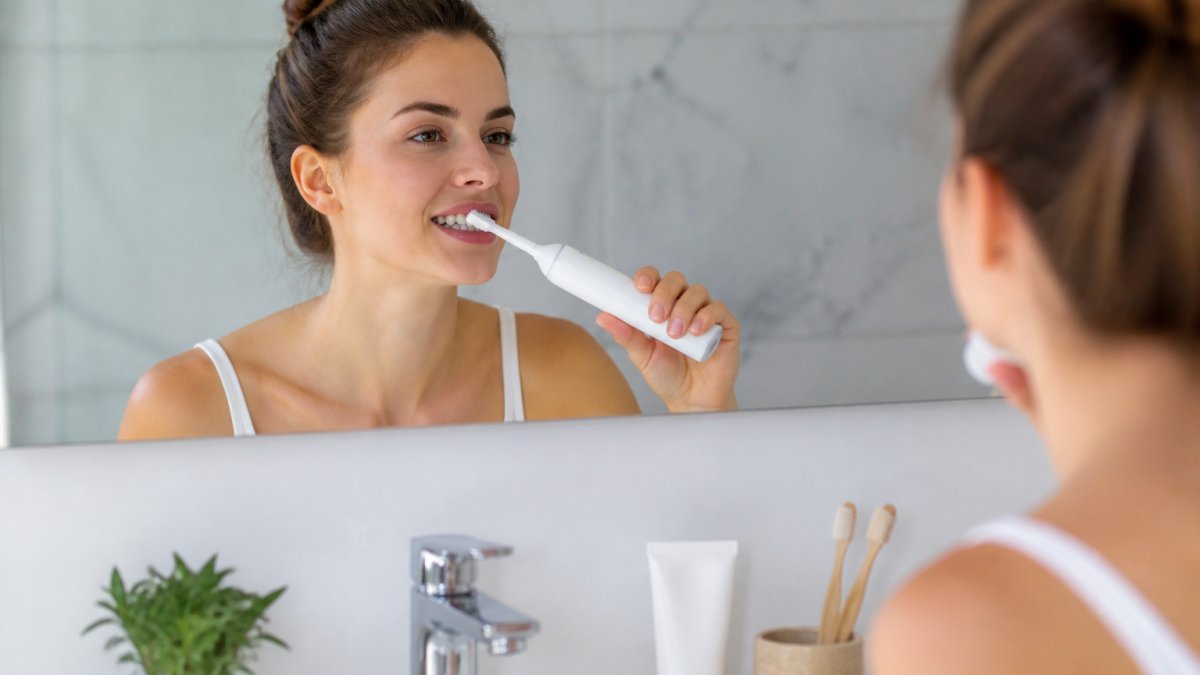
Let the vibration do the work. Light pressure plus steady movement cleans better than heavy pressure plus fast strokes.
Common Mistakes That Undo the Cleaning Benefit
The most common mistake is pressing hard out of habit. The second is rushing past the two-minute mark. Both undermine the brush's main advantage.
- Pressing down as if using a manual brush
- Skipping the gum line and cleaning only the tooth surface
- Replacing the brush head too late, when bristles splay
- Rinsing immediately with water after a remineralising paste
Ultrasonic Toothbrush Replacement Heads and Running Costs
The purchase price is only part of the cost. Replacement heads are the ongoing expense that determines total ownership cost, and they need changing roughly every three months as bristles splay.
Budget for four heads a year per brush. Cheap handles with expensive heads often cost more over two years than a mid-range brush with reasonably priced refills.
Our Cloud Sense Ultrasonic Toothbrush K5 runs on 43,000 VPM sonic technology with five modes (Gentle, Everyday, Intense, Whitening, and Custom), a 2-minute timer with 30-second zone reminders, and a 60-day runtime on a USB-C charge.
Frequently Asked Questions
What is the difference between an ultrasonic and a sonic toothbrush?
Sonic toothbrushes vibrate at roughly 20,000 to 40,000 movements per minute, which is enough to dislodge plaque through the motion of the bristles. Ultrasonic models operate at a much higher frequency, generally above 20,000 Hz, and the claim is that the vibration also creates tiny bubbles in saliva that help break down plaque. In practice, most consumer models sold as ultrasonic in 2026 are high-frequency sonic brushes, so check the stated frequency in Hz rather than trusting the label alone.
Are ultrasonic toothbrushes suitable for sensitive teeth?
They can suit sensitive teeth, but the deciding factor is usually the brush head and how hard you press, not the frequency alone. Soft bristles and a pressure sensor matter more than the motor. If you have receding gums or worn enamel, start on the gentlest mode and hold the head lightly against the gum line rather than scrubbing. Persistent sensitivity should be checked by a dental professional, because it can signal a problem a toothbrush will not fix.
How often should you replace an ultrasonic toothbrush head?
Replace the head roughly every three months, or sooner if the bristles splay and lose their shape. Worn bristles clean less effectively and can scratch the gum line. Replacement heads are inexpensive relative to the brush itself, so a two-pack every few months is a small running cost. If you have been unwell, swapping the head early is a sensible extra step.
Do ultrasonic toothbrushes actually clean better than regular brushing?
The evidence for the ultrasonic mechanism itself is mixed, and much of the marketing outruns the published research. What does hold up is the technology built around it: a two-minute timer, a 30-second zone reminder and a pressure sensor all improve brushing technique, and technique is what removes plaque. A high-frequency brush with those features will generally outperform a manual brush used casually, but it will not compensate for skipping the gum line.
Choosing the right ultrasonic toothbrush comes down to matching frequency, modes, and running costs to your gums rather than chasing the longest feature list. Smile Kit makes that decision simpler with the Cloud Sense K5's five customisable modes, 60-day battery, and affordable refill heads, alongside fluoride-free nano-hydroxyapatite toothgels and red light therapy devices for gum support. Get started with Smile Kit and build an oral care routine that fits how your mouth actually behaves.
